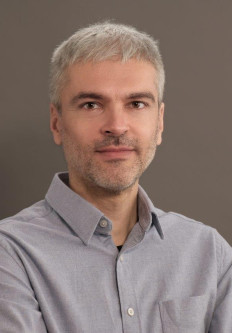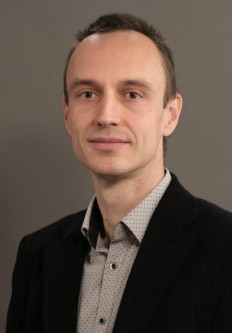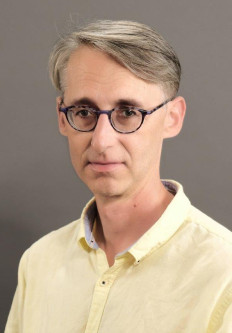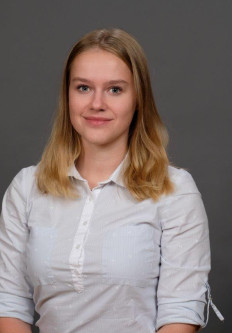
Welcome to the Department of Psychology at the Faculty of Arts, University of Ljubljana. At this site you will find general information about our department and the undergraduate, master’s and doctoral degree study programmes in psychology.
For more specific information, please contact department secretary Ms. Nives Kolarič.
The Department of Psychology was established more than 50 years ago (for a more detailed description, see History of the Department. It is located on the 1st floor of the Faculty of Arts in Ljubljana, on the Aškerčeva Street 2.
In the first two years of the four-year-undergraduate university-degree studies (equivalent to B. Sc. studies in psychology), the emphasis was placed on the fundamentals of theoretical psychology, and in the last two years, students learned more about applied psychology and they could select courses by their choice. After completing four years, they also had to complete a one-month internship and write a thesis which usually took them at least half a year.
In the 1990s, the enrolment was limited to approximately 50 students per year. The enrolment on the part-time studies of psychology was possible every three years from 1995 on.
Besides full and part-time undergraduate studies, students could also enrol on the 2-year postgraduate studies and obtain the scientific title Master’s in Psychology (the title also held a specific selected field of the studies, e.g. M. Sc. in Organisational Psychology, for graduate students from other departments). Students who successfully completed four-year studies on the doctoral level acquired the title Doctor of Psychological Science.
From 2008/09 on, a 3-year undergraduate and a 2-year master’s study programme in Psychology are offered to students. The title Master in Psychology obtained after the completed master’s study programme enables graduates to enter psychological practice in Slovenia.
Several 4-year doctoral studies in different fields of psychology are also offered. They are all carried out as specific orientations within the joint doctoral study programme called The Humanities and Social Sciences. At the Faculty of Arts (being the coordinator of the study programme), doctoral students can pursue their degree in experimental psychology, personality psychology, developmental psychological studies, and applied psychological studies.
There are seven chairs of psychology at the department (for more details, see Psychology) – general psychology, psychological methodology, developmental psychology, social psychology, clinical psychology and psyhotherapy, educational psychology, and psychology of work and organization. Information about the current staff at the Department of Psychology is available here.
The Department has its own library and information-documentation service INDOK. Its important infrastructural parts are also the Laboratory of the Department of Psychology and the Centre for Psychological Measurement and Counselling.
Our department cooperates with other higher education institutions from Slovenia and abroad (Departments of Psychology in Zagreb, Sarajevo, Podgorica, Trnava, CSUI in Lugano, Switzerland, to mention just a few) and many other public institutions (pre-schools, primary and secondary schools, health-care institutions), non-governmental organisations, non-profit organisations (voluntary work), and companies (marketing, HRM, etc.). This cooperation supports the department’s educational, professional, and scientific work.
Head of Department: Prof. Matija Svetina
Deputy Head of Department: Prof. Eva Boštjančič
Department Secretary: Nives Kolarič
Erasmus Exchange Coordinator: Dr. Renata Marčič